
Imposter Syndrome: Could Self-Doubt Be Holding Back Your Career and Finances?
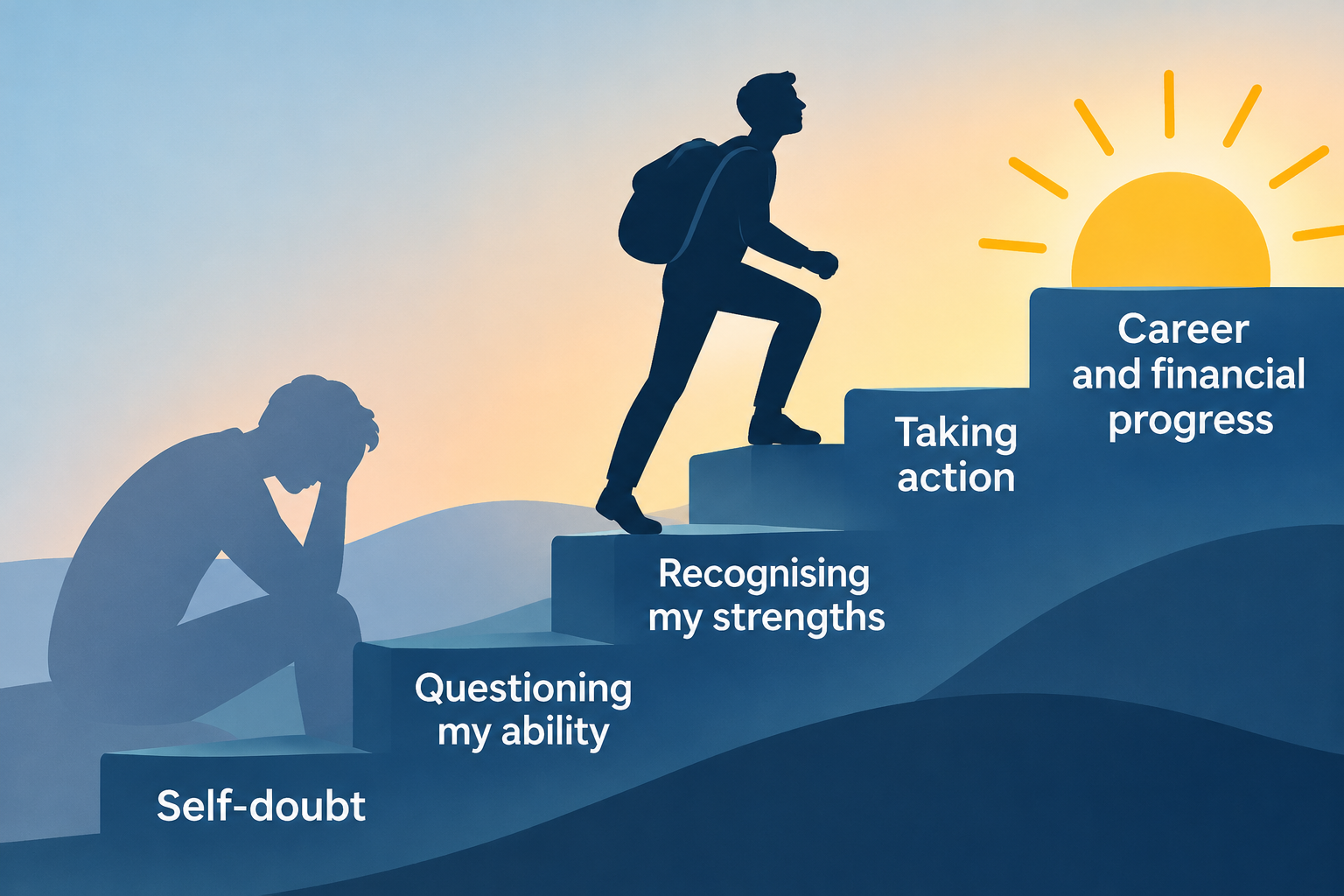
Imposter syndrome can chip away at confidence and limit options. Find out how to recognise and potentially overcome such feelings.
Think back to the last time you landed a new job, gained a promotion or took responsibility for an important work project.Did any of these thoughts cross your mind?
How did I manage to get through the selection process? What will happen when they find out it’s just me? That was lucky.
If these thoughts sound familiar, you may have experienced what psychologists call the impostor phenomenon, more commonly known as imposter syndrome.
Rather than acknowledging that your success reflects your abilities, experience and hard work, you look for other explanations. Luck, being in the right place at the right time, or perhaps the influence of friends or family.
But what happens when these beliefs begin influencing the decisions you make?
To what extent might they be holding back your career and your personal finances? And what might you do and achieve if some of these internal obstacles were removed?
How can imposter syndrome affect your career and finances?
Have you ever decided not to apply for a job because you didn’t think you had what it takes?
Perhaps you’ve drafted an email requesting a pay rise but never quite managed to press send. Or considered starting a business, taking a professional qualification or applying for a promotion, only to convince yourself that you weren’t ready.
These decisions not to act can compound over time, potentially leading to forgone earnings, pension contributions and savings.
Of course, confidence isn’t everything. Some of us face circumstances that severely limit our opportunities and choices. Financial pressures, caring responsibilities, discrimination and health difficulties may present constraints.
But recognising where self-doubt may be influencing our decisions can be an important first step towards change.
What does the research tell us?
Psychologists Pauline Clance and Suzanne Imes helped bring impostor syndrome to prominence in 1978, initially studying high-achieving women who struggled to recognise their own accomplishments.
Since then, researchers have explored how widespread these feelings are and their consequences.
A systematic review by Bravata and colleagues (2020) found that impostor feelings were common across different professions and associated with anxiety, depression, burnout and reduced job satisfaction.
In other words, persistent self-doubt can affect how we feel about ourselves, our work and the opportunities we chase.
And the consequences may extend beyond the individual. The messages we communicate about money, success and our own abilities can influence those around us, including our children.
How can you challenge imposter feelings?
If some of this resonates with you, what might you do?
One starting point is to reflect on your strengths and achievements.
In terms of your career, think about your qualifications, work experience, promotions, responsibilities and occasions when you’ve demonstrated leadership or overcome a difficult challenge.
And also your financial achievements. Perhaps you’ve managed a household budget carefully, repaid debt, developed a savings habit or found the courage to discuss a difficult money issue with your partner.
These are all accomplishments worth recognising.
The next challenge is to accept them.
You might write down your achievements, repeat them out loud or put reminders somewhere you’ll regularly see them. Might you change your professional profile or email signature to reflect your qualifications and experience?
And perhaps the next time a colleague, friend or family member congratulates you on a promotion or recent success, resist the temptation to reply:
Oh, it’s nothing. Anyone could have done it.
Instead, try a simple:
Thank you.
It might feel uncomfortable at first. But acknowledging achievements build confidence.
How can coaching help with imposter syndrome?
Professional coaching offers the opportunity to explore beliefs that may be limiting your choices.
Where did these beliefs come from? What evidence supports them? What evidence challenges them? And how might they be influencing the decisions you make about your career and finances? What options are open to you?
Coaching can also help identify practical steps towards change. Perhaps that means applying for a new role, having a conversation about pay, developing new skills or simply becoming more comfortable recognising your own achievements.
Here’s a question worth reflecting on:
What might you say, do or become if you didn’t have those self-limiting beliefs spooling through your mind?
Carl Rogers, one of the inspirations for client-centred coaching, wrote about the remarkable clarity that can emerge when someone is genuinely listened to:
“It is astonishing how elements which seemed insoluble become soluble when someone listens.”
It is this kind of attentive, clarifying listening that lies at the heart of good coaching.
The aim isn’t necessarily to eliminate every moment of self-doubt. We all experience uncertainty, particularly when facing something new.
Rather, it’s to develop a more balanced understanding of ourselves, recognise the strengths we already possess and make decisions with greater confidence.
If imposter feelings are affecting your career, financial decisions or confidence about the future, working with a coach could be a useful place to start.
George Callaghan
Financial Coach and Transition Coach
Positive Money Habits
References
Bravata, D. M., Watts, S. A., Keefer, A. L., Madhusudhan, D. K., Taylor, K. T., Clark, D. M., Nelson, R. S., Cokley, K. O., & Hagg, H. K. (2020). Prevalence, Predictors, and Treatment of Impostor Syndrome: A Systematic Review. Journal of General Internal Medicine, 35(4), 1252–1275.
https://doi.org/10.1007/s11606-019-05364-1
Clance, P. R., & Imes, S. A. (1978). The impostor phenomenon in high achieving women: Dynamics and therapeutic intervention. Psychotherapy: Theory, Research & Practice, 15(3), 241–247.
Flora, C. (2016). The fraud who isn’t. Psychology Today.
https://www.psychologytoday.com/us/articles/201611/the-fraud-who-isnt
Rogers, C. R. (1980). A Way of Being. Boston: Houghton Mifflin.